Lakeflow Ingestion Pipelines Simplify Databricks Workflows
Boost your career with Croma Campus’s React JS Course Online. Learn to build modern web applications using React, gain practical experience, and earn a recognized certification to enhance your job opportunities.
A common issue data engineers often might face is finding incomplete sales figures. The source database contains all the records. But the reporting table fails to get all of them. As a result, professionals need to trace the transfer and check job logs to identify what went wrong. This often takes up a lot of time. Databricks Lakeflow organises this part of the work. Beginners can join the Databricks Course to learn from industry experts.
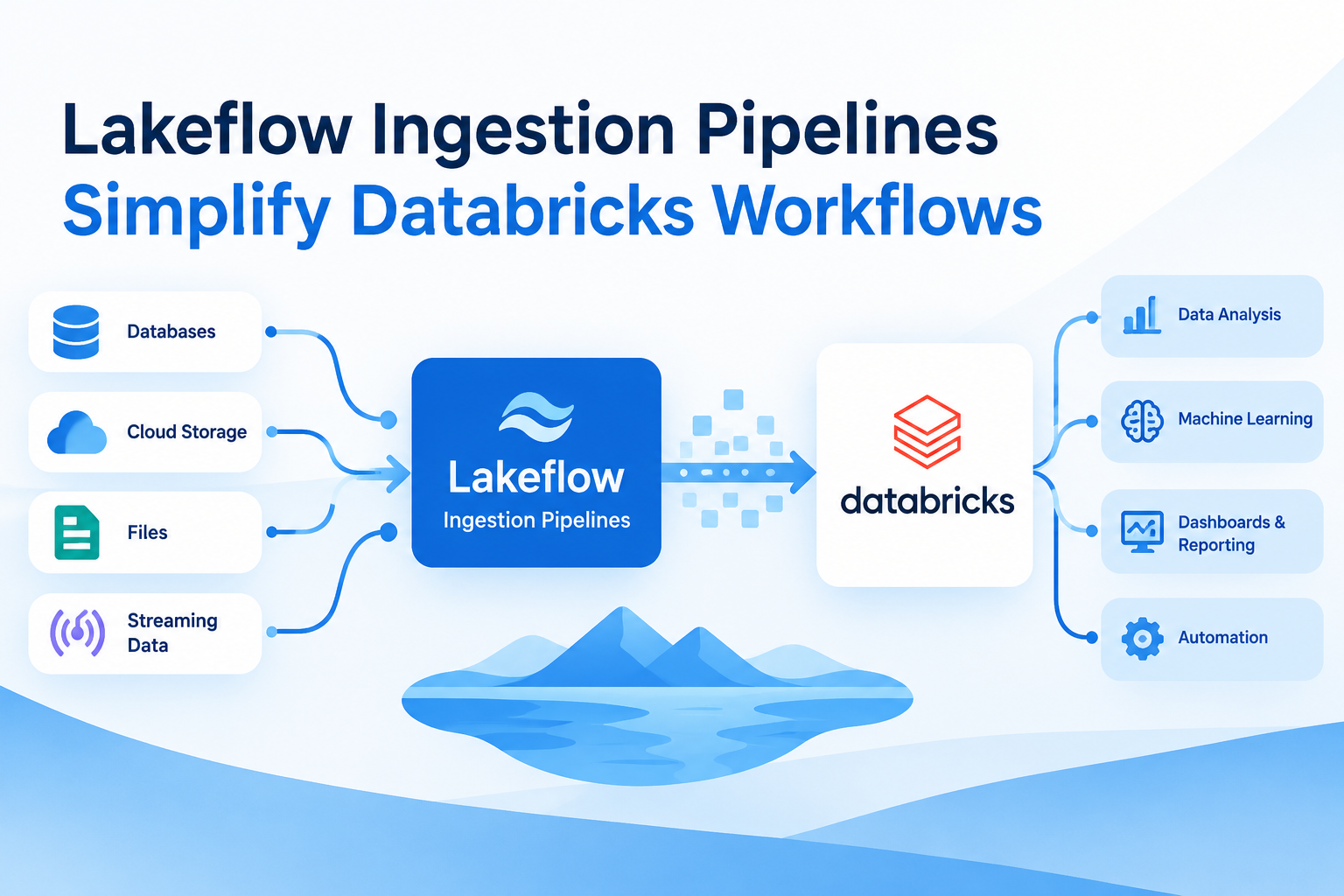
Why Moving Data Takes More Effort Than Expected
Companies may not always keep all the information in a single system. Most of the time, Customer details are stored in a CRM application while the payment records are stored in a database. Similarly, product information stays in separate files. Analytics teams need these records together to resolve business queries. The trouble often starts after the first successful data load.
A source application adds a new field. The scheduled job may miss its run. An existing customer record may change. the reporting table still contains the old values. As a result, Engineers need to check have each issue separately.
Writing separate scripts for every source is a common method to handle ingestion. In this, someone needs to maintain the scripts according to the congaing requirements. Lakeflow provides another option for supported sources within the Databricks environment.
How Lakeflow Ingestion Fits Into a Data Workflow
Suppose an online retailer wants to analyse its daily orders. Operational databases contain the following information:
· order IDs
· customer details
· payment status
· product information
data teams need those records in Databricks before it prepares the reports.
Using the right Lakeflow ingestion option enables teams to configure how data moves from supported source to the destination.
The process might look like this:
· The engineer configures the source connection and required permissions.
· The ingestion process loads the relevant records into Databricks.
· New records and changes are handled according to the connector's supported capabilities.
· The team applies additional processing when the raw data needs cleaning.
· The prepared tables become available for analysis.
The initial load brings existing records into the destination. Once that is done, teams can use incremental ingestion to process new or changed data. They no longer need to repeatedly load the entire dataset. The Databricks Course in Noida follows the latest industry patterns to offer the right guidance for beginners planning a career in this field.
What Happens When Existing Records Change?
Beginners often overlook this point. Suppose a customer places an order for ₹5,000 and cancels it later on. The original order already exists in the analytical database. If the cancellation does not reach the reporting table, sales reports show an incorrect figure.
Many Ingestion methods support change data capture (CDC). It is used to identify the changes in the source records. This allows downstream systems to process them. Other methods use periodic extraction or different update mechanisms.
Lake flow Connect provides ingestion capabilities for supported sources. Engineers must check the connector's behavior before they decide how the pipeline must handle the following events:
· Inserts
· Updates
· deletions
Less Script Maintenance, Clearer Monitoring
Custom scripts may not be a bad choice always. Specialised sources need custom code. Some teams already have reliable ingestion processes in a place. The difficulty arises when every source has:
· its own schedule
· error handling
· monitoring method
if systems are unrelated, tracing a failed transfer can become tricky.
With Lakeflow, teams can manage supported ingestion processes inside Databricks environment. Pipeline status and available monitoring information provides engineers a starting point every time a run fails.
Common problem | What the team should check |
Records are missing | Source data, load status, and update settings |
A pipeline fails | Error details, permissions, and source availability |
Reports show old values | Whether updates are captured correctly |
Data looks inconsistent | Transformation rules and source quality |
Monitoring makes investigation easier. However, it does not fix every problem automatically. Professionals may need to understand the error. This helps them decide the next step. The Databricks Classes in Delhi offer ample hands-on practice sessions for learners to master these tools.
Ingestion Does Not Mean the Data Is Ready
Once the data reaches Databricks, professionals need to perform a number of tasks. Suppose an order table contains:
· blank product codes
· repeated rows
· dates in different formats
reporting teams may not always use these records as it is.
This is where data transformation comes in. Databricks Lakeflow Spark Declarative Pipelines makes development and management of the data transformation workflows streamlined. Engineers rely on these workflows to perform tasks like:
· Cleaning records
· Applying business rules
· Creating tables for reporting
I suggest professionals to maintain clean ingestion and transformation responsibilities. This makes overall design easier to understand. It proves useful every time a problem appears. If source records arrived correctly but the final report is wrong, teams can check the transformation logic separately.
A Few Checks Before Getting Started
Before building a pipeline, one must confirm that the required source is supported. Check the following areas:
· the volume of data
· the expected update frequency
· the way the connector handles changed records
this will help you Decide who can monitor the failures. One can also decide what data quality checks must be run before reporting happens.
The above decisions play a major role for accurate final result. Daily reports may work perfectly with scheduled ingestion. On the other hand, an operational dashboard may need frequent updates. The Databricks Course is designed for beginners and offers the right guidance in this field from scratch.
Conclusion
Lakeflow ingestion pipelines reduce efforts needed to bring supported data sources inside Databricks. Users get more manageable process for teams. This allows them to handle regular data transfers. Engineers must check compatibility of the sources. They need to monitor the failures and validate the results. Planning these details properly saves a lot of time.